
For US Healthcare Professionals Only

For US Healthcare Professionals Only

One 30 mg
Pill Twice a Day
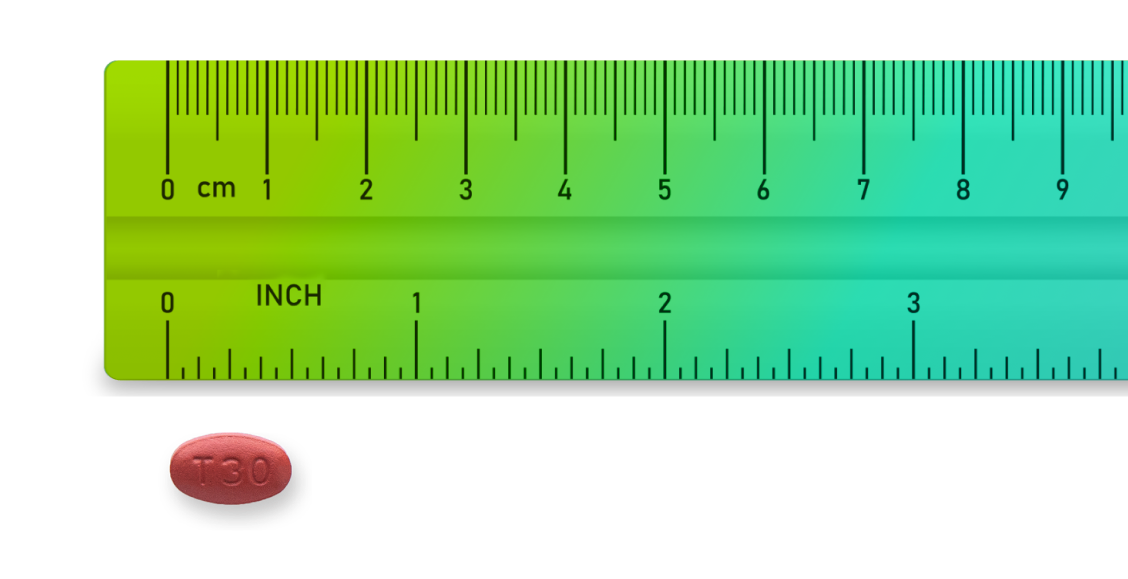
The recommended dose is 30 mg twice daily, before the morning and evening meals.1
Adjust dose to manage serum phosphorus levels and tolerability.1
If GI tolerability is a concern, XPHOZAH is also available in a 20 mg dosage form.1
Instruct patients who miss a dose to skip the missed dose and take the next dose at the regular time.1
Instruct patients to stop the use of laxatives and stool softeners when starting treatment with XPHOZAH.1
If patients experience diarrhea, it will likely happen soon after starting XPHOZAH and go away with continued treatment, or their doctor may lower their dose.1,2
Patients should be counseled not to take XPHOZAH right before a hemodialysis session, and to take XPHOZAH right before the next meal, as some patients may experience diarrhea.1
Instruct patients to contact their healthcare provider if they experience severe diarrhea.1
If a dose of XPHOZAH is missed, the missed dose should be skipped and the next dose should be taken at the regularly scheduled time.1
There are no drug interactions that require dose adjustments of XPHOZAH.
There is the potential for reduced efficacy of concomitant drugs that are substrates of OATP2B1. However, no dose adjustment of enalapril is needed when used with XPHOZAH. XPHOZAH and sodium polystyrene sulfonate (SPS) should be administered at least 3 hours apart since SPS binds to many commonly prescribed oral medications.1
There are no dose adjustments needed for XPHOZAH in specific age groups.
XPHOZAH is indicated for adult patients with chronic kidney disease (CKD) on dialysis as an add-on therapy in patients who have an inadequate response to phosphate binders or who are intolerant of any dose of phosphate binder therapy.1
There are no dose adjustments needed for XPHOZAH in patients with renal or hepatic impairment.1
Phosphate binder management when initiating XPHOZAH may vary based on clinical judgment, individual patient response, tolerability, and serum phosphorus levels.
The efficacy and safety of XPHOZAH was established in three phase 3 trials,1-4 including two monotherapy studies1,3 and one study evaluating use in combination with phosphate binders.2 An open-label study (OPTIMIZE) evaluated different ways of initiating XPHOZAH, including reduction and discontinuation of binder therapy.5
XPHOZAH is indicated for adult patients with chronic kidney disease (CKD) on dialysis as an add-on therapy in patients who have an inadequate response to phosphate binders or who are intolerant of any dose of phosphate binder therapy.1
Diarrhea, if experienced, is most commonly reported soon after initiation and may resolve over time or with dose reduction. The recommended dose is 30 mg BID; however, a 20 mg dose is available if GI tolerance is a continued concern.1
For more on diarrhea incidence and management, visit the Safety page.
XPHOZAH® (tenapanor) full Prescribing Information. Waltham, MA: Ardelyx, Inc.; 2025.
Pergola PE, Rosenbaum DP, Yang Y, Chertow GM. A randomized trial of tenapanor and phosphate binders as a dual-mechanism treatment for hyperphosphatemia in patients on maintenance dialysis (AMPLIFY). J Am Soc Nephrol. 2021;32(6):1465-1473.
Block GA, Bleyer AJ, Silva AL, et al; PHREEDOM study investigators. Safety and efficacy of tenapanor for long-term serum phosphate control in maintenance dialysis: a 52-week randomized phase 3 trial (PHREEDOM). Kidney360. 2021;2(10):1600-1610.
Block GA, Rosenbaum DP, Yan A, Chertow GM. Efficacy and safety of tenapanor in patients with hyperphosphatemia receiving maintenance hemodialysis: a randomized phase 3 trial. J Am Soc Nephrol. 2019;30(4):641-652.
Sprague SM, Weiner DE, Tietjen DP, et al. Tenapanor as therapy for hyperphosphatemia in maintenance dialysis patients: results from the OPTIMIZE study. Kidney360. 2024;5(5):732-742.
XPHOZAH (tenapanor) 30 mg BID is indicated to reduce serum phosphorus in adults with chronic kidney disease (CKD) on dialysis as add-on therapy in patients who have an inadequate response to phosphate binders or who are intolerant of any dose of phosphate binder therapy.
XPHOZAH is contraindicated in:
Patients may experience severe diarrhea. Treatment with XPHOZAH should be discontinued in patients who develop severe diarrhea.
Diarrhea, which occurred in 43-53% of patients, was the only adverse reaction reported in at least 5% of XPHOZAH-treated patients with CKD on dialysis across trials. The majority of diarrhea events in XPHOZAH-treated patients were reported to be mild-to-moderate in severity and resolved over time, or with dose reduction. Diarrhea was typically reported soon after initiation but could occur at any time during treatment with XPHOZAH. Severe diarrhea was reported in 5% of XPHOZAH-treated patients in these trials.
For additional safety information, please see full Prescribing Information.
XPHOZAH (tenapanor) 30 mg BID is indicated to reduce serum phosphorus in adults with chronic kidney disease (CKD) on dialysis as add-on therapy in patients who have an inadequate response to phosphate binders or who are intolerant of any dose of phosphate binder therapy.
XPHOZAH is contraindicated in:
Patients may experience severe diarrhea. Treatment with XPHOZAH should be discontinued in patients who develop severe diarrhea.
Diarrhea, which occurred in 43-53% of patients, was the only adverse reaction reported in at least 5% of XPHOZAH-treated patients with CKD on dialysis across trials. The majority of diarrhea events in XPHOZAH-treated patients were reported to be mild-to-moderate in severity and resolved over time, or with dose reduction. Diarrhea was typically reported soon after initiation but could occur at any time during treatment with XPHOZAH. Severe diarrhea was reported in 5% of XPHOZAH-treated patients in these trials.
For additional safety information, please see full Prescribing Information.
